Bobbin Lacemaking in Slovenia
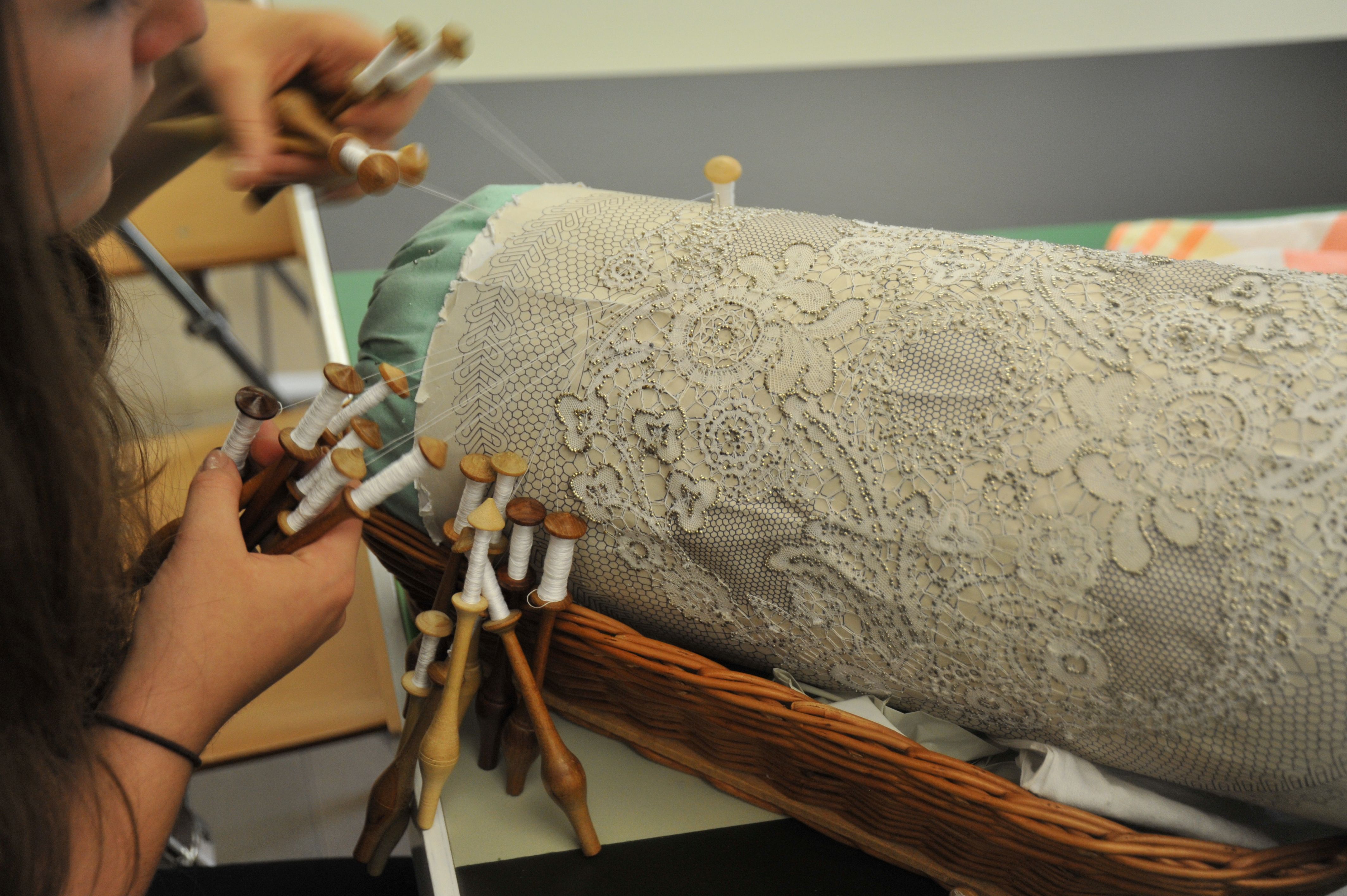
At its 13th session, held in Port Louis, Mauritius, UNESCO’s Intergovernmental Committee for the Safeguarding of the Intangible Cultural Heritage inscribed the nomination Lace-making in Slovenia on UNESCO’s Representative List of the Intangible Cultural Heritage of Humanity on Thursday, 29 November 2018.
The nomination brought together the bearers of two elements from across Slovenia that are inscribed in the national Register of the Intangible Cultural Heritage under the elements Idrija Lacemaking and Slovenian Lacemaking.
Lacemaking is the craft of producing lace by interweaving threads wound on bobbins. In the Idrija region, it has been present since the second half of the 17th century. In the 19th century, it spread from Idrija and became established in a wider area, where it developed new forms of expression.
Bobbin lacemaking is the handcraft of producing lace by crossing, twisting and interweaving threads wound on bobbins. The term Slovenian lace became established in the period between the two World Wars in the territory of present-day Slovenia, which at that time formed part of the Kingdom of Yugoslavia.